A 2025 Tufts University analysis shows that 50% of young people say they “rarely or never spend time in person with others in their community.”
It’s a worrying statistic, considering the lifelong benefits that community involvement provides for young people. But one simple activity can strengthen the community ties that are lacking among today’s youth.
That activity is volunteering.
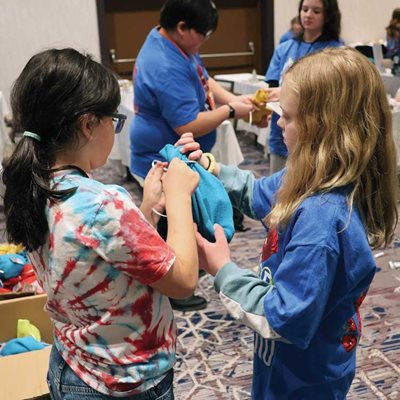 Youth volunteering not only benefits the young people who participate, but it also strengthens support for the organizations they are assisting.
In the American Legion Auxiliary, members can encourage volunteering among their children and grandchildren and with Junior members and Sons of The American Legion youth.
“It is important for parents and grandparents to include their kids in all ALA activities,” said Melanie Taylor, ALA 2025-2026 national Children & Youth Committee chair. “It not only gives them a sense of worth, that they are contributing, but it also teaches them the importance of volunteering and serving their community, veterans, and military families.”
Research shows the value that children and teens derive from participating in volunteer activities:
• A 2017 study in Social Science Research shows that adolescents who voluntarily get involved in community activities are more likely to maintain that civic connection as adults.
• Survey data in JAMA Network Open in 2023 links volunteering with better health and decreased rates of anxiety and behavioral problems among children and teens.
• A 2025 analysis from the global Organisation for Economic Co-operation and Development connects volunteering during teenage years with better workplace skills and higher earnings in the future.
There are also advantages for the groups that youth volunteers assist — and the organizations’ adult members.
Input from multiple generations can foster understanding and generate stronger ideas, leading to more impactful activities. And youth volunteering helps build a foundation for future support.
“They learn by doing,” Taylor said of children and teens who volunteer, “and will carry forward the values we have taught them by including them in our programs.”
Youth volunteer ideas for ALA units
With the many positive outcomes of youth volunteering in mind, Taylor, suggested that ALA units not only actively engage young family members but also encourage participation in an ALA youth program.
“If the kids are willing to help out, ask them what ideas they have that might benefit the activity your group is working on,” she said. “Let them lead the way, and the senior members assist. This builds a cohesive respect.”
Junior members and young SAL members can also take part in the ALA Patch Program to earn recognition while they learn about patriotism, health, fitness, and leadership — and serve their communities.
Possible community service activities:
• Collecting canned goods for a local food pantry or homeless shelter.
• Cleaning up parks in their community.
• Decorating a teacher’s classroom door during Teacher Appreciation Week.
• Supporting veterans and their families by co-chairing Veterans Affairs & Rehabilitation or Poppy Program activities.
Taylor also recommended that adults encourage ALA youth volunteers even after an activity or event ends.
“Recognize their accomplishments and celebrate them, giving them a sense of pride,” she said. “By doing all these things, they will feel a part of The American Legion Family and be willing to participate and become our future leaders.”
In the spirit of Service, Not Self, the mission of the American Legion Auxiliary is to support The American Legion and to honor the sacrifice of those who serve by enhancing the lives of our veterans, military, and their families, both at home and abroad. For God and Country, we advocate for veterans, educate our citizens, mentor youth, and promote patriotism, good citizenship, peace and security.


